
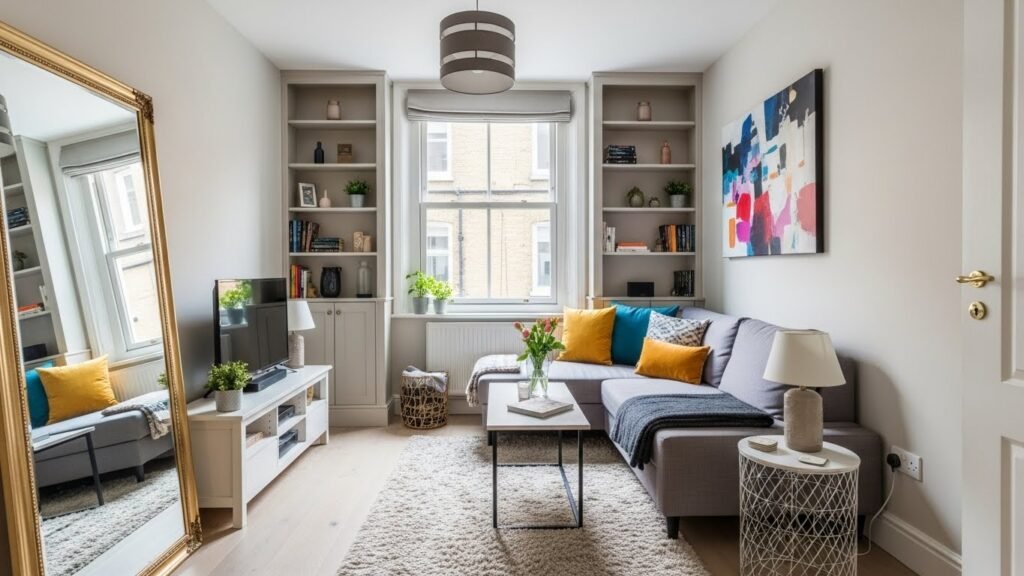
Living in a small London flat presents a unique challenge: creating a beautiful, functional, personal space within serious square-footage constraints. You need clever design, intentional choices, and a commitment to restraint. But here’s the beautiful thing—small spaces, when decorated thoughtfully, actually feel more luxurious and intentional than sprawling ones.
This guide reveals the exact strategies London-based interior designers use to make small flats feel bigger, brighter, and genuinely beautiful.
The Psychology of Small Spaces
Before diving into specific tactics, understand this: small spaces feel either cramped or cosy, depending entirely on how they’re decorated. Clutter makes them feel oppressive. Thoughtful curation makes them feel intimate and exclusive.
The goal isn’t to make your flat feel bigger than it is—that’s not realistic. Rather, it’s to make it feel intentional, beautiful, and genuinely comfortable.
Vertical Space Is Your Secret Weapon
In small flats, you can’t expand horizontally, so you must use vertical space strategically.
Vertical strategies:
-
Tall bookcases that reach the ceiling (IKEA Billy units are perfect)
-
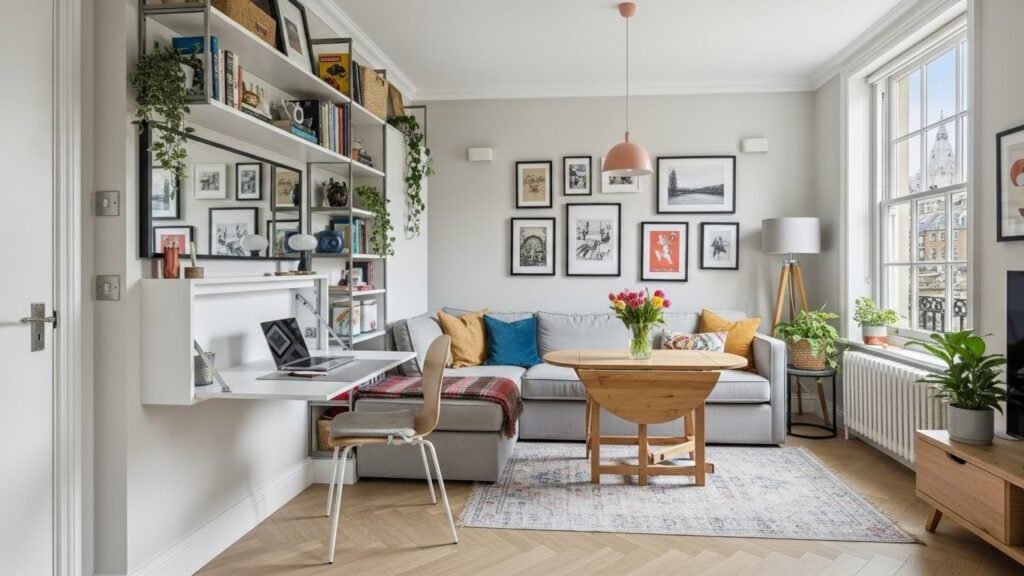
Wall-mounted shelving that provides storage without a floor footprint
-
Hanging plants that add greenery without taking up table space
-
Floor-to-ceiling curtains that make ceilings feel higher
-
Wall-mounted desks or storage that fold away
-
Tall artwork or mirrors that draw the eye upward
The visual effect of drawing the eye upward makes rooms feel simultaneously larger and more intentional.
Mirrors and Reflective Surfaces
A strategically placed mirror reflects light and creates the illusion of additional space. Position a large mirror opposite your window to amplify natural light throughout the day.
But go beyond basic functionality. A mirror with an interesting frame—perhaps vintage, ornate, geometric, or metallic—becomes a design feature rather than just a practical element. Your London flat will feel lighter and more spacious immediately.
Mirror placement tips:
-
Opposite windows to reflect natural light
-
Above side tables to create visual height
-
At different angles to create depth and visual interest
-
In entryways to make small halls feel less cramped
Lighting for Space and Mood
Small flats desperately need good lighting. Harsh overhead lights make tiny spaces feel even smaller and more claustrophobic. Instead, layer your lighting with wall sconces, table lamps, and perhaps a dimmer-controlled ceiling fixture.
Lighting strategy for small spaces:
-
Multiple smaller light sources rather than one central fixture
-
Dimmers on all lights to adjust the mood and brightness
-
Wall lights in bedrooms to save bedside table space
-
Floor lamps in corners to make rooms feel more spacious
Warm-toned bulbs (2700K) feel more inviting in intimate spaces than cool-toned alternatives.
Multifunctional Furniture Is Non-Negotiable
Every piece of furniture in a small flat must earn its place by serving multiple purposes.
Multifunctional furniture solutions:
-
Storage ottomans that provide seating, storage, and a side table
-
Nesting tables that expand when needed, contract when not
-
Murphy beds or sofa beds for dual-purpose living rooms
-
Floating desks that fold against walls
-
Shelving units that double as room dividers
-
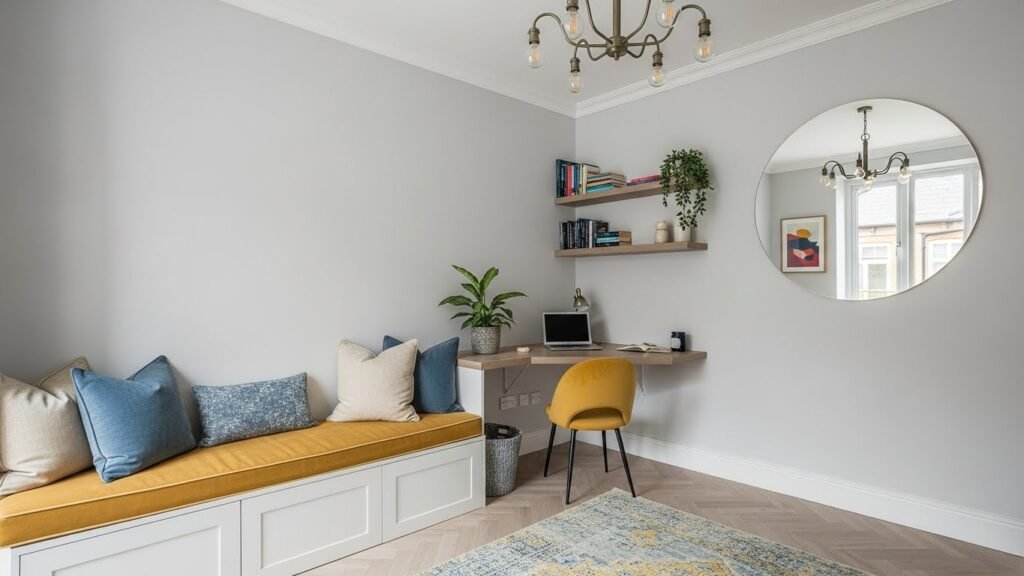
Benches with storage rather than standard chairs
-
Under-bed storage for items you don’t access frequently
The best multifunctional pieces don’t look like compromises. They’re beautifully designed, functional, and genuinely improve your living experience.
Colour Strategies for Small Spaces
The myth that small spaces require all-white colour schemes isn’t true. Yes, light colours make spaces feel airier, but you can absolutely use deeper colours if you’re thoughtful.
Colour strategies that work:
-
Light, neutral walls with rich accent colours in soft furnishings
-
Colour drenching one wall (the feature wall) whilst keeping others pale
-
Monochromatic colour schemes (different tones of the same colour) that feel cohesive
-
White or pale ceilings always (they make ceilings feel higher)
-
Light flooring or large-scale light rugs that create a spacious feeling
The key? Keep at least 70% of your visible wall space light or neutral. This provides the spacious foundation. Then introduce richer colours through artwork, furnishings, and accessories.
Decluttering and Curation
Small spaces cannot hide clutter. Every visible object impacts how spacious or cramped your flat feels.
Curation principles for small spaces:
-
80% rule: Keep 80% of surfaces clear, 20% thoughtfully styled
-
One-in-one-out: Every new item requires something leaving
-
Beautiful storage: Use attractive baskets, boxes, and containers so stored items feel intentional
-
Vertical storage: Utilise walls instead of floor space
-
Regular purges: Every season, reassess what you actually use and enjoy
-
Display only what you love: If it doesn’t make you happy or serve a purpose, it shouldn’t be visible
This might sound restrictive, but the reality is liberating. A small flat with curated objects feels infinitely better than a small flat packed with belongings.
Creating Zones in Open-Plan Living
Many London flats are open-plan, combining living, dining, and sometimes sleeping areas. Creating visual zones makes each area feel distinct and prevents the space from feeling like one jumbled room.
Zone-creating strategies:
-
Area rugs that define the living area, dining area, and bedroom zone
-
Shelving units as room dividers that don’t block light
-
Different wall colours for different zones (if walls are flexible)
-
Varied flooring (rugs, wooden sections) that define zones visually
-
Furniture arrangement that clearly delineates space use
Window Treatments That Don’t Consume Space
Standard curtain rails can feel bulky in small flats. Consider:
-
Roman blinds that provide privacy and light control without bulk
-
Sheer curtains that filter light and add softness
-
Tall curtains that reach the ceiling to make the ceiling feel higher
-
Minimal framing around windows to maintain visual lightness
Avoid heavy velvet curtains or dark treatments that consume visual space. Light, minimal window dressing maintains the sense of openness.
Artwork for Small Spaces
Rather than one large piece, small flats often benefit from multiple smaller artworks arranged thoughtfully.
Small space artwork strategy:
-
Gallery walls of various-sized prints create visual interest without overwhelming
-
Lean artwork against walls rather than hanging for flexibility and less permanence
-
Large-scale single pieces, if positioned carefully (not overwhelming)
-
Mirror artwork to reflect light and create an illusion of space
-
Photography or abstract art, rather than dense, colourful pieces
The goal is to add personality and visual interest without making the space feel cluttered or compressed.
Your London Flat Transformation Strategy
Start with clarity: Remove everything you don’t use, need, or genuinely love. Yes, really everything.
Add light: Mirrors, light paint colours, and thoughtful lighting make enormous differences.
Choose multifunctional furniture: Every piece must earn its place.
Keep walls mostly clear: One accent wall or piece of artwork, otherwise pale and serene.
Style purposefully: Every visible object should be beautiful, functional, or ideally both.
Conclusion
Small London flats require different thinking than larger spaces, but that constraint actually leads to better design. You can’t hide behind excess. Every choice matters. The result? A flat that feels genuinely thought-out, beautiful, and far more luxurious than larger homes decorated without intention. Your small space isn’t a limitation—it’s an opportunity to create something genuinely special.