
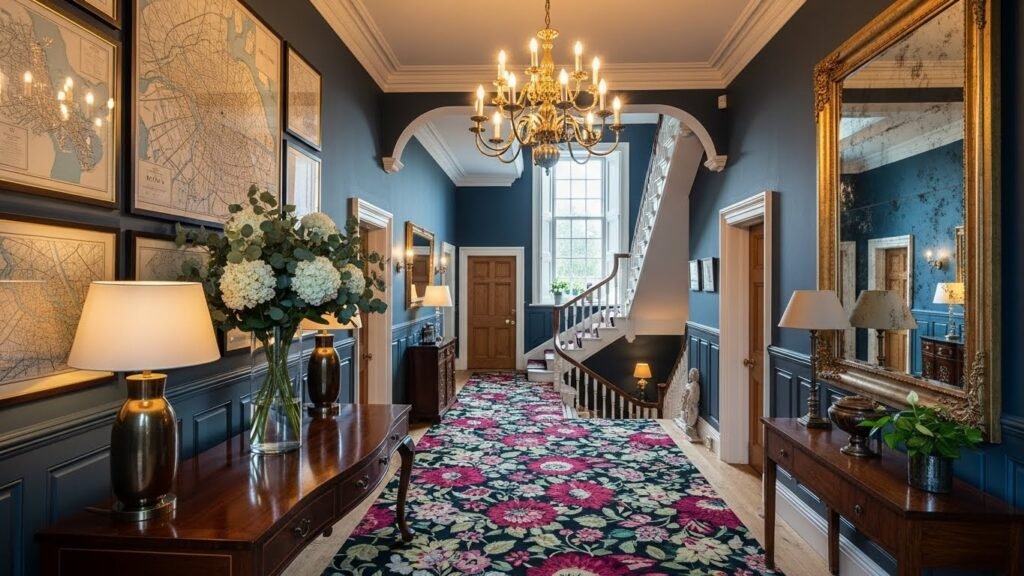
Your hallway is the first thing guests see when they enter your home—your opportunity to make an impression. Yet so many British homes treat hallways as afterthoughts: narrow, dark passages decorated with whatever couldn’t fit elsewhere. This is a missed opportunity.
A thoughtfully decorated hallway makes a powerful statement about your home and your taste. It sets the tone for every room beyond. This guide shares how to transform your hallway from an overlooked passage to a stunning entrance.
The Purpose of a Great Hallway
A well-designed hallway accomplishes multiple things simultaneously:
-
Makes a first impression: Sets the tone for your entire home
-
Provides functionality: Storage, a place for shoes and coats
-
Creates flow: Connects various rooms logically
-
Maximises light: Often the darkest part of homes
-
Expresses personality: First chance to show your style
Great hallways do all this whilst remaining uncluttered and welcoming.
Lighting: The Foundation of Hallway Design
Most hallways lack natural light, making artificial lighting crucial. A single dim ceiling light creates a dark, uninviting passage. Layer lighting instead.
Hallway lighting strategy:
-
Central fixture: A pendant light, chandelier, or ceiling light
-
Wall sconces: On either side of mirrors or artwork (adds elegance)
-
Floor lights: Low-level lights for safety and ambiance
-
Optional: table lamp: On a console table, if space allows
Choose warm-toned bulbs (2700K) for a welcoming feeling. Incorporate dimmers so you can adjust brightness throughout the day.
Hallway lighting should be bright enough to navigate safely but warm enough to feel inviting. That balance transforms a passage into a destination.
Colour for Impact and Guidance
Hallway colour creates a psychological impact. Dark, moody colours (deep green, navy, burgundy) feel luxurious and sophisticated. Light colours feel airy and spacious. Either works—choose based on your home’s overall aesthetic and your hallway’s natural light.
Hallway colour considerations:
-
Very light hallways: Deeper colours work beautifully (forest green, charcoal, navy)
-
Dark hallways: Light colours feel necessary, but pale warm tones work even better than stark white
-
Feature walls: Consider colour drenching (all surfaces in the same colour) for maximum impact
-
Paint quality: Use a slightly higher-quality paint—hallways receive significant wear
Hallway colour should either match your living spaces (creating visual flow) or create an intentional colour transition (signalling a new space).
Create a Focal Point
Every hallway needs a focal point—something that draws the eye and anchors the space visually.
Hallway focal points:
-
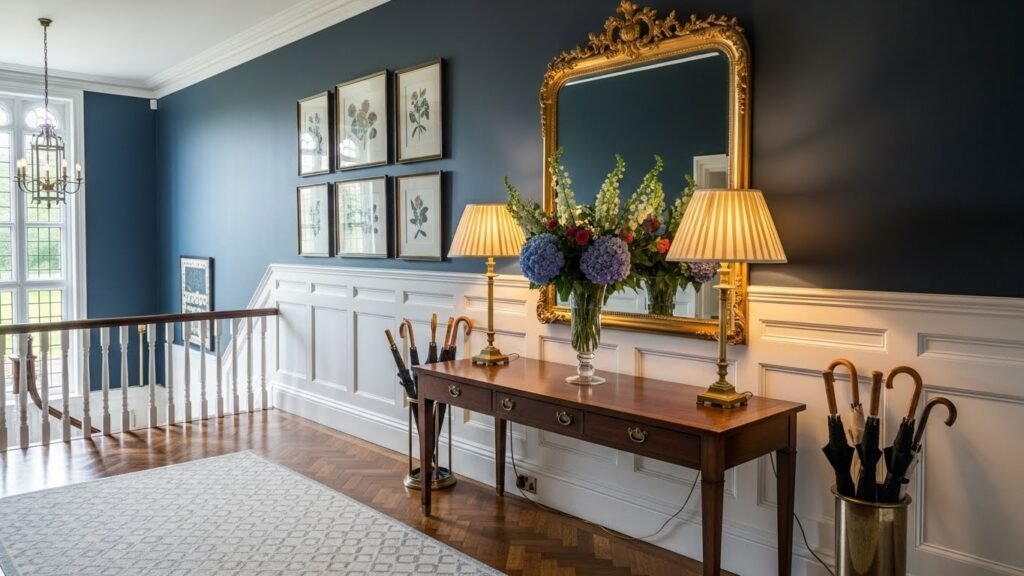
Large mirror: Reflects light and creates visual interest (choose an interesting frame)
-
Artwork or gallery wall: Makes a bold statement immediately
-
Console table with styling: Functional and decorative
-
Wallpapered accent wall: Creates drama and texture
-
Architectural feature: A doorway, staircase element, or existing moulding
This focal point shouldn’t be cluttered. One statement piece (large mirror or artwork) has more impact than multiple smaller items.
Mirrors for Light and Space
Hallways desperately need mirrors—for practical reasons (do your hair, check your appearance) and for design reasons (reflect light, create illusion of space).
Choose mirrors with interesting frames rather than plain glass. A vintage ornate mirror, a contemporary geometric frame, or a mid-century option becomes décor rather than just functionality. Lean large mirrors against walls for an effortless aesthetic, or hang them at varying heights.
Hallway mirror tips:
-
Position opposite windows to maximise light reflection
-
Choose frames that complement your hallway colour and style
-
Consider multiple smaller mirrors arranged together for visual interest
-
Ensure mirror placement is practical (at a useful height)
Console Tables and Styling
A console table in your hallway provides practical storage (keys, post, parcels) whilst offering a stylish surface. Keep it minimal but intentional.
Console table styling:
-
One statement vase or sculpture
-
A table lamp for ambient light
-
A small plant or two
-
A decorative tray for corralling items
-
Perhaps a framed photograph or small artwork above
The goal is curated, not cluttered. Every item should be beautiful or functional (ideally both).
Storage Without Clutter
Hallways accumulate things: shoes, coats, posts, umbrellas, dog leads. Provide attractive storage so items don’t pile up on floors.
Hallway storage solutions:
-
Coat rack: Wall-mounted, decorative, functional
-
Shoe storage: Under-bench storage, wall-mounted shelves, or built-in cubbies
-
Umbrella stand: Beautiful umbrella stand in the corner
-
Floating shelves: For displaying baskets containing items (looks styled, not cluttered)
-
Hall tree: Combines hooks, a bench, and often storage
-
Baskets: Woven baskets on shelves contain items, whilst looking intentional
The key? Each item has a designated home. This prevents hallway clutter whilst maintaining beautiful aesthetics.
Hallway Flooring
Most UK hallways have hard flooring (wood, tile, or stone). This can feel cold and uninviting.
Flooring warmth:
-
Runner rug: Adds warmth, texture, and defines the hallway space
-
Geometric patterns: Contemporary look
-
Natural textures: Jute, sisal, or wool feel warm and elegant
-
Wipeable materials: Essential in hallways (muddy shoes, wet coats)
Choose runners with interesting patterns or textures rather than plain solid colours. Dunelm and Wayfair stock excellent hallway runners at reasonable prices.
Walls Beyond Paint
While paint is the simplest option, other wall treatments add sophistication.
Hallway wall options:
-
Wallpaper: Feature walls create drama and personality (look for patterns that complement your style)
-
Shiplap or panelling: Creates architectural interest (particularly beautiful in period homes)
-
Artwork and gallery walls: Multiple pieces create a curated, collected feel
-
Colour drenching: All surfaces (walls, ceiling, trim) in the same colour for maximum impact
-
Texture: Textured wallpapers or even plaster treatments add depth
Your hallway walls are prime real estate for personality. Make them count.
Lighting for Artwork
If displaying artwork in your hallway, light it properly. Picture lights (small lights mounted on frames) or directed wall lights create a professional gallery atmosphere.
Properly lit artwork becomes a focal point. Unlit artwork can disappear, especially in hallways with limited natural light.
Ceiling Treatment
Hallway ceilings are often overlooked. They needn’t be.
Ceiling options:
-
Paint the same as walls: Colour drenching creates a sophisticated, cohesive look
-
Paint darker than walls: Creates an intimate feeling (though can feel lower)
-
Wallpaper: Bold geometric or floral patterns create impact
-
Exposed beams: If you have them, highlight rather than hide
Many British hallways have beautiful ceiling details (cornicing, roses, original features). Don’t hide them—highlight with appropriate painting and lighting.
Fresh Elements
Fresh flowers, plants, or diffusers add life and sensory welcome to hallways.
-
Potted plants: Small trailing plants on shelves or hanging baskets
-
Fresh flowers: Weekly blooms on console table
-
Scent: A subtle diffuser, candle, or fresh flowers provide an olfactory welcome
-
Seasonal touches: Update with season-appropriate items
These living elements remind visitors (and you) that your home is cared for and intentional.
Hall-Specific Style Considerations
Different hallway styles suit different homes:
Victorian/Period Properties: Deep colours, ornate mirrors, artwork, and historical features highlighted
Contemporary Homes: Clean lines, minimal accessories, statement lighting, geometric art
Cottage/Country Style: Warm colours, vintage finds, nature-inspired art, soft textures
Modern Minimalist: Limited colour palette, single statement piece, excellent lighting, no clutter
Choose a direction that matches your home’s overall aesthetic. Consistency makes homes feel designed rather than accidental.
Your Hallway Transformation Plan
Week 1: Add lighting (wall sconces, updated ceiling fixture, or dimmer)
Week 2: Paint or wallpaper walls and ceiling
Week 3: Add a large mirror and a hallway focal point
Week 4: Arrange console table, add runner rug, and style with care
Even implementing two or three of these ideas transforms your hallway dramatically.
Conclusion
Your hallway is where first impressions happen. A stunning entrance says “I care about my home” before guests even step into your living room. With thoughtful lighting, appropriate colour, one strong focal point, and minimal clutter, your hallway becomes a beautiful introduction to your entire home. That impact matters more than you might think. Create a hallway you’re proud to welcome guests into, and you’ve created something genuinely valuable.