
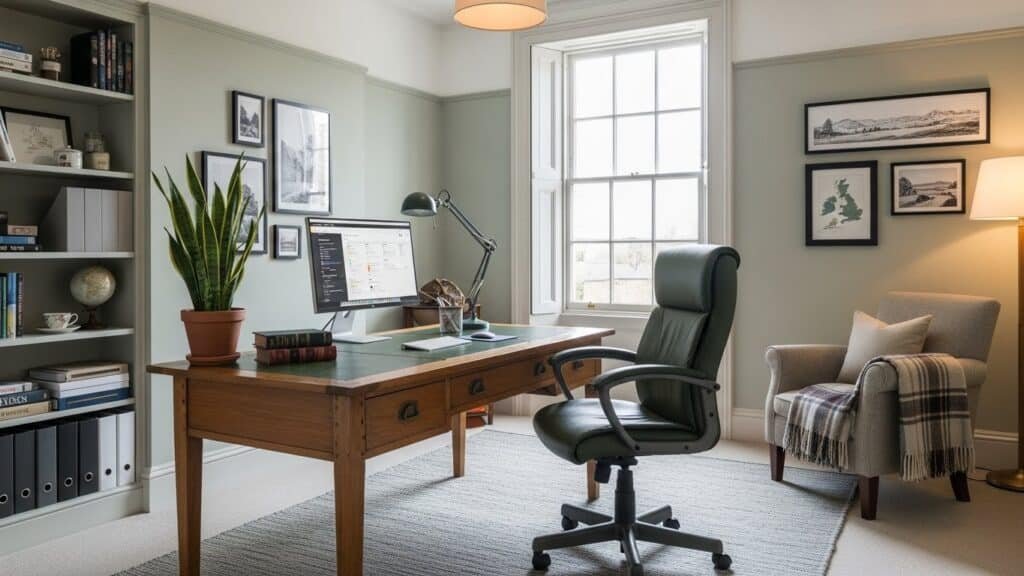
Your home office isn’t just where you work—it’s where you spend significant hours daily. Yet many home offices feel like afterthoughts: spare rooms hastily furnished with leftover furniture, uninspiring and distinctly unmotivating. A thoughtfully decorated home office, by contrast, enhances productivity, supports focus, and makes you actually want to spend time there.
This guide shares how to create a UK home office that’s beautiful, functional, and genuinely inspiring.
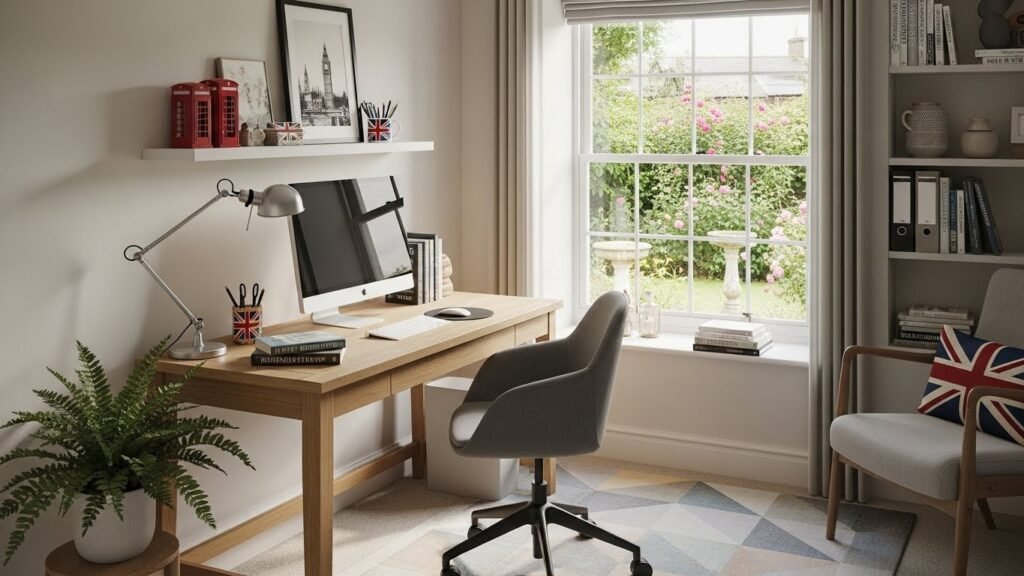
The Productive Office Environment
Productivity isn’t purely about furniture—it’s about environment. The right decoration supports focus and motivation.
Environmental factors affecting productivity:
-
Lighting: Adequate, preferably natural light
-
Colour: Influences mood and focus
-
Noise: Some control over sound levels
-
Organisation: Systems preventing visual chaos
-
Comfort: Ergonomic seating, appropriate temperature
-
Inspiration: Decoration motivating focus
Great office decoration addresses all these elements.
Workspace Layout and Furniture
Your office layout determines productivity and comfort.
Essential office furniture:
-
Desk: Appropriately sized for work requirements, good height
-
Chair: Ergonomic, comfortable for hours of sitting
-
Storage: Drawers, shelving, filing systems
-
Surfaces: Additional tables for equipment or projects
-
Lighting: Desk lamp plus ambient lighting
Layout principles:
-
Desk placement: Facing door or window, away from distractions
-
Monitor height: Screen at eye level (if possible)
-
Cable management: Hidden cables reduce visual clutter
-
Movement space: Adequate room to stand and stretch
-
Separation: Visual separation from the living space, if possible
Colour for Office Spaces
Office colour has a significant impact on productivity and mood.
Productive office colours:
-
Blue: Promotes calm focus (best for detail work)
-
Green: Reduces eye strain, supports concentration
-
Warm neutrals: Welcoming without overstimulation
-
Soft yellows or creams: Warm without being aggressive
-
Avoid: Bright reds or intense colours (stimulating, not focus-supporting)
Consider painting one accent wall rather than the entire room—creates interest without overwhelming.
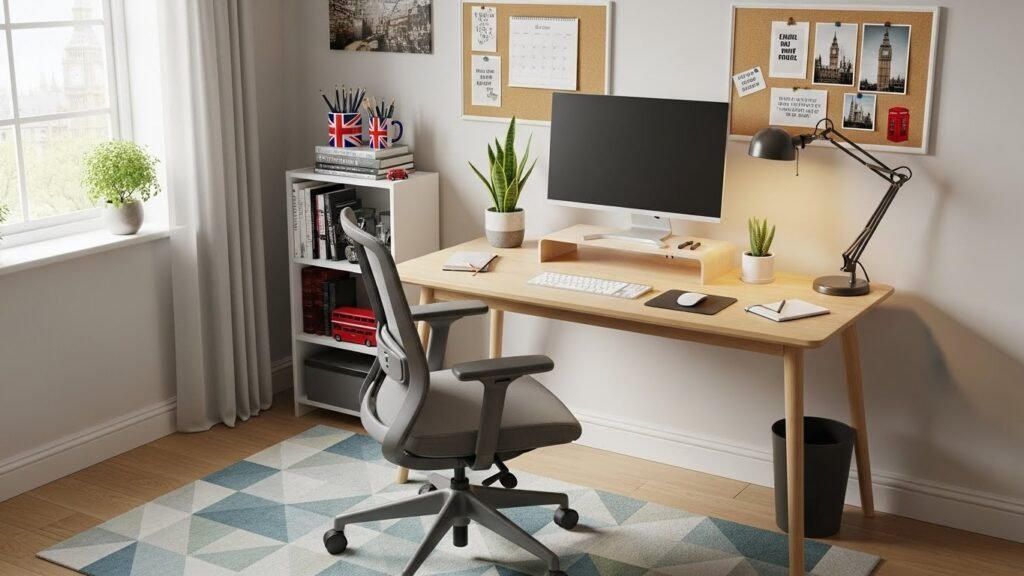
Lighting for Focus and Comfort
Office lighting prevents eye strain and supports productivity.
Office lighting strategy:
-
Natural light: Position the desk near windows if possible
-
Task lighting: Desk lamp for the direct work area
-
Ambient lighting: Overall room illumination, preventing harsh shadows
-
Dimmers: Adjust brightness throughout the day
-
Warm bulbs: 2700K–3000K support focus and comfort
Avoid harsh overhead lights or glare on screens.
Storage and Organisation
Office clutter destroys productivity and focus.
Office storage solutions:
-
Filing systems: Organized filing prevents paper accumulation
-
Shelving: Vertical storage utilises wall space
-
Drawers: Hide supplies and documents
-
Woven baskets: Beautiful storage for cables, miscellaneous items
-
Desk organizers: Keep the immediate workspace clear
-
Wall-mounted storage: Doesn’t consume floor space
The rule: every item has a designated place, and everything visible serves current purpose.
Inspiration and Motivation
Office decoration should inspire and motivate.
Motivational elements:
-
Artwork: Pieces you genuinely love, perhaps achievement-related
-
Quotes: Inspiring words in simple frames
-
Vision board: Goals and aspirations visually displayed
-
Plants: Living greenery supports wellbeing and focus
-
Photographs: Personal images connecting you to what matters
-
Collections: Items related to your work or interests
These shouldn’t clutter the workspace—one or two meaningful pieces are sufficient.
Plants and Natural Elements
Plants improve air quality and wellbeing whilst supporting focus.
Office plants:
-
Low-maintenance varieties: Survive without fussy care
-
Pothos: Trailing vine, virtually impossible to kill
-
Snake plant: Architectural, air-purifying
-
ZZ plant: Glossy, modern appearance
-
Monstera: Statement plant, dramatic leaves
-
Succulents: Minimal water needs, interesting forms
Position plants where they won’t block the view or the screen, yet provide visual interest.
Creating Boundaries
Home offices blur work-life boundaries. Decoration can help create psychological separation.
Boundary-creating elements:
-
Room divider or screen: Separates the office from the living space visually
-
Dedicated office colour scheme: Different from living areas
-
Door closure: If possible, close off the office when not working
-
Distinct furniture: Office furniture differs from living room pieces
-
Ending ritual: Something signalling a shift from work to personal time
Psychological separation supports work focus and leisure recovery.
Ergonomics and Comfort
Comfortable office promotes productivity and prevents injury.
Ergonomic considerations:
-
Chair height: Feet flat on floor, knees at 90 degrees
-
Monitor height: Eye level when looking straight ahead
-
Desk height: Elbows at 90 degrees when typing
-
Posture support: Lumbar support in chair
-
Wrist support: Keyboard tray if needed
-
Movement: Regular stretching, standing breaks
Discomfort ruins productivity regardless of decoration.
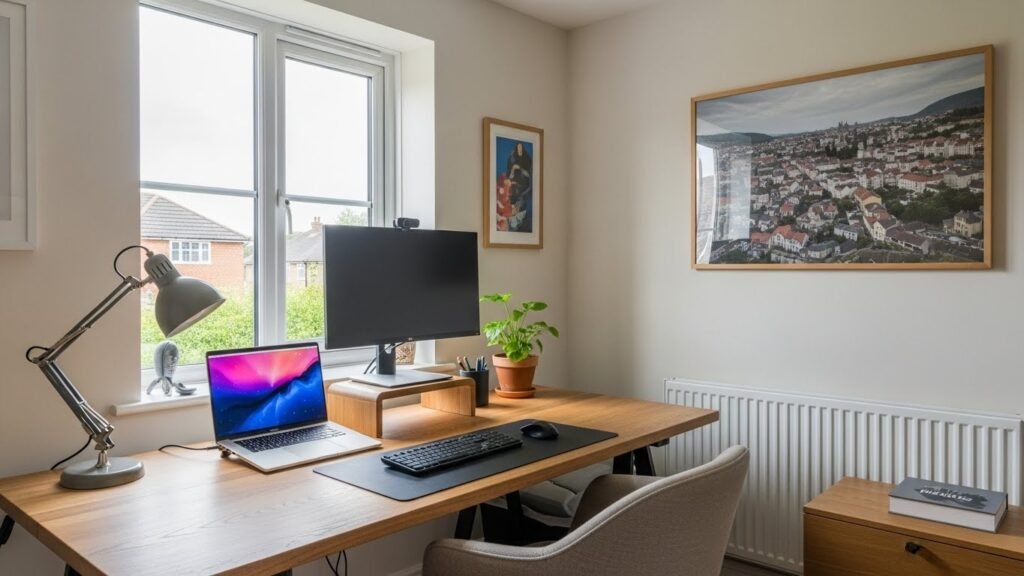
Textiles and Soft Furnishings
Office textiles add comfort and warmth.
Office textiles:
-
Curtains or blinds: Control light, provide privacy
-
Rug: Adds warmth, defines workspace
-
Cushions: Add comfort to the office chair or seating
-
Throws: For comfort if sitting for long periods
-
Upholstered office chair: More pleasant than plastic
Neutral colours prevent distraction whilst adding comfort.
Personal Touches
Personalised offices are more motivating and pleasant.
Personal elements:
-
Family photographs: Reminder of what matters
-
Awards or achievements: Motivational reminders
-
Hobby-related items: Reflects personal interests
-
Favourite art: Pieces bringing joy
-
Meaningful objects: Items with personal significance
Balance personalisation with professional appearance for client meetings.
Technology Integration
Office decoration must accommodate technology.
Tech-friendly decoration:
-
Cable management: Hidden cables keep space clean
-
Monitor stands: Elevate screens appropriately
-
Device charging stations: Designated, hidden if possible
-
Wall mounting: Reduces desk clutter
-
Speaker placement: Audio quality without taking up space
Technology needn’t dominate visually if thoughtfully integrated.
Sound Management
Noise disrupts focus, particularly with open-plan homes.
Sound management:
-
Door closure: Reduces household noise
-
Soft furnishings: Absorb sound, reduce echo
-
Rugs and curtains: Sound-dampening properties
-
Headphones: For music or focus sounds
-
Door sweep: Seals the gap between the door and the floor
Some people focus better with background noise (coffee shop ambiance, brown noise, instrumental music).
Budget Home Office Decoration
Creating a productive office needn’t be expensive:
-
Charity shops: Office furniture at bargain prices
-
IKEA: Affordable, functional office pieces
-
Wayfair: Range across price points
-
Second-hand marketplace: Local office furniture
-
DIY: Paint existing furniture, repurpose items
-
Minimal decoration: Focus on functional essentials
You can create a beautiful, productive office on a modest budget.
Your Home Office Transformation Plan
Phase 1: Assess current setup, identify improvements needed
Phase 2: Address ergonomics and lighting
Phase 3: Implement storage and organisation
Phase 4: Paint walls and add finishing touches
Phase 5: Personalise with inspiration and motivation
Conclusion
Your home office deserves as much thoughtful decoration as your living room. A productive, beautiful workspace supports your work quality and wellbeing. With appropriate furniture, thoughtful colour, good lighting, and inspired decoration, you create an environment where you’re genuinely motivated to work. That environment matters more than many people realise. Invest in your home office decoration—you spend significant hours there, and that investment pays dividends in productivity and satisfaction.
